Educating with Sibelius
Pilot Composition Program at Bellevue Leads to
Success at Performance Level
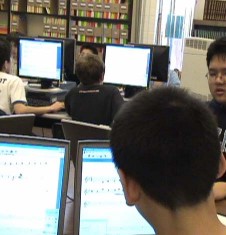 Located in the Seattle, Wash. area, the Bellevue School District has a track record of high standards and notable achievement – college placement rates hover near 90 percent, and its high schools have been listed by Newsweek among the best in the nation. When curriculum planners in its music department decided that students needed a grounding in composition to reach their potential as performers, they turned to Sibelius to power a pilot program.
Beginning in April, 22 students in Sammamish High School and 120 students in Tyee Middle School worked in 30-station computer labs equipped with the Sibelius Education Suite, using site licenses funded by the school district in part through a community-approved technology levy. To kick off the program, district technology and music experts wrote and printed their own instructional booklet incorporating the program goals and the use of Sibelius.
Despite instructors’ initial wariness about pushing their regular performance schedule back two weeks, says district Technology Curriculum Coach Jack Halm, “The feedback was overwhelmingly positive.” And the reaction among students? “What’s another word besides excited?”
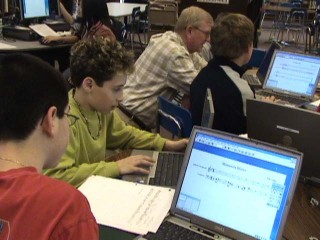 After preparing simple melody lines using pencil and paper, the students dove into Sibelius for two weeks of composition before moving on to their orchestra and band preparation. Each student in the pilot used Sibelius to enter a melody line, experiment with countermelodies, tempo changes, percussion and bass lines, and end up with a finished 8- or 16-line piece of music. “This was no small feat, and everybody did it,” reports Halm.
“We had kids who had been taking private lessons, and kids who were struggling as musicians,” Halm notes. “The program was a leveler – every student working in the lab had a finished product at the end.”
Mark Wilbert, the band director at Tyee and one of the program booklet’s co-authors, said the software’s playback capability was one of the reasons the district chose it – and a key factor in his students’ enthusiasm.
“The kids would put their ideas into the computer and get instant feedback on how it sounded,” Wilbert says. “That made a real difference. The project reached through to some kids who were slipping through the cracks on the performance end of things.”
Not every copy of Sibelius was loaded into a desktop computer; some went onto laptops, which students could check out of the library for use in a practice room or another environment.
At the end of the pilot composition program, Wilbert says, students whose experience had been limited to performing other people’s music had a deeper understanding of the structure of melody, accompaniment and orchestration, and a better sense of their role in an ensemble. He also reports that many students went beyond the program requirements and expanded upon the assignment. “It really lit a fire under some kids,” he says. “They’ve taken it and run with it.”
Ultimately, the pilot program’s success will be judged on whether the district opts to expand it to the other high schools and middle schools in the community. A key test took place at a recent monthly meeting when Halm, Wilbert, Technology Curriculum Coach Aaron Faletto and Curriculum Developer Pam Schroeder presented several of the students’ finished melodies to other district music instructors who hadn’t taken part.
“They were blown away,” Halm reports.
Other case studies
Teacher Manual
Download Composing with Sibelius (PDF, 269 KB)
Published on Sibelius.com with the kind permission of Bellevue School District

SibeliusEducation forums
Chat about teaching and learning in Music.