
 I made the switch
by Michael Boo (composer & arranger)
I DIDN'T RELISH the thought of learning a new music notation program. After being a registered owner of Finale since 1991, I had long since overcome Finale's substantial learning curve and could certainly be deemed a "power user." But friends kept insisting that I give Sibelius a try, praising its ease of use, its command of projects big and small, and its practically non-existent learning curve.
I'm a creature of habit. The idea of being versed in two notation software products held little interest for me. This attitude comes from the same person who had two years of French in high school so he could be bi-lingual and then couldn't find the bathrooms when he got to Montreal.
With trepidation, anxiety and a sense I was being foolish, I gave Sibelius a try.
Big mistake... big, big mistake. No, trying Sibelius wasn't a big mistake. Waiting as long as I did was the error. To think that for many of my Finale years, I could have been having fun notating my music... arghhhh!!!
Yes, Sibelius isn't only a snap to learn, it's fun to use. I didn't know software was supposed to be fun. Sibelius puts the joy back into writing music.
I swear on a pile of yearly Finale updates, Sibelius offers one no compelling reason not to try the program. What it does offer is more time to do the other things you've been putting off... gardening, scrubbing out the refrigerator, putting new handles on the kitchen cabinets. Everything is faster, more convenient, easy to learn, easy to figure out, easy to adjust, easy to tweak, easy, easy, easy...
About those Finale updates: once a year, I would be hit up with spending lots of money to stay up-to-date with Finale's latest version. Some versions offered a few major changes, some offered minor tweaks of a relatively unsubstantial nature. But almost each year, I was expected to send in a sizeable chunk of money to be sure I always had the latest Finale version on my computer. And God help me if the people I shared files with didn't have the latest version on their computers, as Finale was not backwards compatible.
Sibelius is on its fourth version... since 1998. The company only updates the program when it has something substantial to add. Sibelius doesn't come with planned obsolescence in mind. Think of Finale as the way American automakers used to make cars: every year there was a new model, quite different in appearance from the year before. If you didn't have the latest model, your vehicle just plain looked old. Sibelius is more like the European automakers: with the attitude that if it's right the first time, there's no need to keep reinventing the wheel.
Jonathan and Ben Finn, the brothers who created Sibelius, decided to start from scratch. Essentially, they threw out all prior convention known about music notation software. Instead of building upon the DNA of what had come before it, Sibelius was built from the ground up with a new chassis, new engine and new transmission. The result is a program that is as elegant as it is simple to use , beautiful in its sleekness. It's the sports car sold for hundreds of thousands of dollars that everyone admires because of its aesthetic lines. But like that sports car, when you turn it on and press the pedal, you leave the competition in the dust.
When one first fires up Sibelius, there are a few things that come as a surprise to a Finale user. There are no multiple levels of tool palettes. Click on anything and it can be moved when it turns blue... no sub-menus to tweak something one way or the other. What one wants to find always seems to be where one wants it. The program is so intuitive is seems to be reading the mind of the user.
Jonathan and Ben Finn must be masters at understanding how the human brain really works, as Sibelius seems to anticipate one's needs with controls that are so well laid out, one doesn't need to go on a search and find mission for every little nuance. When I had some questions how Sibelius did something, I would first think, "If I could design this program, this is where I would put what I need right now," and, more often than not, what I needed was where I expected it, or what I tried was what I needed to do. At times, it seemed as if my brain was connected to the program by a system of electrodes.
To my total shock, by the end of the day that I first started experimenting with Sibelius, I had entered all the notes and style markings for the bulk of a three-movement symphonic band suite that had previously existed only in pencil sketch form. That was when I knew my life in front of the computer had changed forever. Of course, I was able to tweak the score as I learned the increased power of Sibelius. Tweaking and moving things around were no big deal. Add a new instrument I had forgotten? Hey, no problem.
Attaching crescendos and decrescendos is easy and effective... One doesn't have to go through contortions to instruct the program where each specifically ends. Want to place a particular dynamic marking under a note? Instead of assigning a series of keystrokes to each marking, just hit a simple keystroke and type the marking. Just type the marking! How logical. The same goes for placing text above notes.
Transferring old files from Finale to Sibelius is much less of a chore than I thought it might be. I'm thankful for this, as I've got some 14 years of Finale files that I might someday have to work with and update.
Gosh, I can go on and on. I can tell you I get a good giggle when I receive a Finale update form, informing me of the latest and coolest new features of the updated Finale version of the year. I giggle because more often than not, I've already been able to do that in Sibelius.
(I could not have planned this any better. I swear I am not making this up. Immediately after writing the paragraph above, I received an e-mail asking me to upgrade to Finale 2006 for "only" $99.95. Finale 2006 "raises the bar with new and amazing features," the first one listed being Kontakt Player, like in Sibelius. Is there a harmonic convergence going on, or what?)
Frankly, it is difficult to imagine Sibelius getting any more intuitive, helpful and powerful than Sibelius 3, the program I fell in love with, but let’s consider Dynamic Parts, just one of the many improvements that have been added to Sibelius 4.
This new feature keeps a full score and its parts in a single file, linked together invisibly so that when one changes something in the score, it is automatically updated in the parts. Also, if one changes something in a single part, that too is automatically updated in the score. Wow, wow, wow! What a time saver that will be for anyone who ever prints out parts, has an ensemble play the piece, and then makes changes to the piece. No more going through every part to make the same changes or having to start with new parts from scratch.
There are other new features as well that make Sibelius 4 a worthy upgrade and a compelling reason to switch from Finale. The time to do so has never been more unmistakably persuasive. Any reasons not to do so have evaporated into thin air.
While I would never say that Finale has no value, I am willing to stick my neck out on some firm beliefs: For most of us, Sibelius offers an alternative that is easier to learn, easier to use and it puts the fun back into writing music. It's so easy to learn that those folks who (like me) already know Finale, have nothing to lose by trying Sibelius. Educators especially will appreciate how easy it is for their students to learn the program as well.
So, whether you're new to using a computer for music notation or have used another program for years, it's time to try Sibelius. It's time to fall in love with Sibelius.
I'm ecstatic that I made the switch.
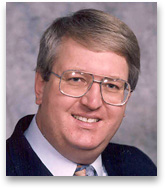
Michael Boo is an arranger, composer (and ex-Finale user) from Indiana, USA. He also writes for Drum Corps International. (He has no connection with Sibelius; this is his own independent opinion.)
